
Vitamin D Deficiency in Nawanshahr: 9 Signs Your Body Is Running Low

REVIEWED BY DR. SHOKET ALI (MD MEDICINE) on 5th october 2026.
Tired by 4 pm even after a full night’s sleep? Lower back pain that never fully settles? Knees complaining while climbing stairs? Hair fall, frequent colds, low mood, and body ache that comes and goes for months? Most people in Nawanshahr have one standard answer for all of this: “Sab ko hota hai.”
But your body does not send the same signals again and again without a reason.
Vitamin D deficiency is one of the most common and most ignored health problems in Punjab. And here is the part that surprises everyone: we live in a place with plenty of sunshine, yet a large number of people still run low. Sunlight is available. Exposure is not.
There is a second belief that keeps people from getting tested: “Our Indian diet is healthy, we don’t need supplements.” Milk, ghee, paneer, dal, roti, sabzi. A good diet, no doubt. But almost none of it contains meaningful vitamin D.
The good news? Vitamin D deficiency is easy to detect and easy to correct. One simple blood test tells you where you stand.
In this guide, we will explain vitamin D in simple language: what it does in your body, the 9 warning signs you should not ignore, who is most at risk, why sunlight and diet often fall short, how the test works, and when you should get checked at a hospital in Nawanshahr.
What Is Vitamin D and Why Does Your Body Need It?

Vitamin D is called a vitamin, but it behaves more like a hormone. Your skin makes it when sunlight touches it directly. A very small amount comes from food.
Most people think vitamin D is only about bones. That is a very small part of the story.
What Vitamin D Actually Does
- Helps your body absorb calcium from food
- Keeps bones and teeth strong
- Supports muscle strength and balance
- Helps the immune system fight infections
- Affects mood, energy, and sleep quality
- Supports hormone balance
- Plays a key role in a child’s growth and bone development
So when vitamin D is low, the effect is not limited to one part of the body. It can show up in your bones, muscles, immunity, hair, mood, and energy all at once.
Why Your Body Cannot Store It Forever
Vitamin D levels drop slowly, over months. There is no sudden pain. No fever. No emergency.
That is exactly why deficiency goes unnoticed. By the time symptoms become obvious, levels may have been low for a very long time.
Is Vitamin D Deficiency Common in India?
Yes. Very common, across all age groups, in cities and villages, in sunny states too. But here is the point people miss: common does not mean harmless.
Body pain feels normal because everyone around you has body pain. Tiredness feels normal because everyone is tired. That does not make it healthy.
Why People in Nawanshahr Should Not Ignore Vitamin D Deficiency

Vitamin D deficiency is a quiet condition. It does not force you to visit a doctor. It just slowly reduces your energy, strength, and immunity while you keep adjusting.
Sunlight Is Available, But Exposure Is Not
Think about a normal day in Nawanshahr. You leave home in the morning, spend the day inside a shop, office, factory, school, or college, and come back in the evening. The strongest sunlight hours pass while you are indoors.
Even when you do step out:
- Clothing covers most of the skin
- Dupatta, full sleeves, helmet, and scarf block direct sunlight
- Peak Punjab summer makes standing in the sun uncomfortable
- Winter fog reduces useful sunlight for weeks
- Sunscreen and glass windows block the rays that make vitamin D
Also, darker skin tones need longer sun exposure to produce the same amount of vitamin D. That is biology, not a flaw. So the sun is right there. Your skin is just not meeting it.
The Indian Diet Myth
This is the biggest hesitation people have. “Hum ghar ka khana khate hain, deficiency kaise ho sakti hai?”
Home food is excellent for many reasons. But very few foods in the world naturally contain vitamin D, and most of them are not part of a typical Punjabi vegetarian plate.
Milk, curd, paneer, and ghee give you calcium and protein. Without vitamin D, your body cannot absorb that calcium properly. So you may be eating well and still becoming weak.
Fortified foods, which are common in other countries, are still not widely used here.
Symptoms Get Blamed on Everything Else
This is where most of the delay happens.
- Body pain gets blamed on “kaam ki thakan”
- Tiredness gets blamed on poor sleep
- Knee and back pain gets blamed on age
- Hair fall gets blamed on water quality
- Low mood gets blamed on stress
- Frequent illness gets blamed on weather change
Every symptom gets a convenient excuse. So the test never happens.
Ignoring It Now Costs More Later
Long-term low vitamin D is not just about feeling tired. Over years, it can affect bone density, increase the chance of fractures in older adults, cause muscle weakness and balance problems, weaken immunity, and affect growth in children. In severe cases it can lead to rickets in children and osteomalacia, which means soft and painful bones, in adults.
The frustrating part is that this is one of the easiest deficiencies to detect and correct. It only becomes a serious problem when it is ignored for years.
9 Warning Signs of Vitamin D Deficiency You Should Not Ignore

Vitamin D deficiency does not look the same in every person. Some feel it in their bones. Some feel it in their energy. Some notice it in their hair or mood. Instead of waiting for one dramatic symptom, look for the pattern.
1. Constant Tiredness and Low Energy
You sleep 7 or 8 hours and still wake up feeling heavy. Energy crashes in the afternoon. Simple tasks feel like effort. Stamina feels lower than it used to be.
Most people accept this as normal life. But persistent tiredness with no clear reason is one of the earliest and most common signs of low vitamin D.
When to check: tiredness lasting for several weeks despite proper sleep and food.
2. Bone, Back, and Joint Pain
A dull, deep ache in the lower back, hips, knees, legs, or heels. It often feels worse in the morning or in cold weather.
Vitamin D helps your body absorb calcium. When levels are low, bones do not get the calcium they need and can become soft and painful. This is very often mistaken for normal ageing or overwork.
When to check: repeated bone or back pain without any injury.
3. Muscle Weakness, Cramps, and Heaviness
Difficulty climbing stairs. Struggling to get up from the floor or from a sitting position. Leg cramps at night. A general feeling of heaviness in the thighs and calves.
Vitamin D is directly linked to muscle function. Weakness in the thigh and hip muscles is a classic sign, and in older adults it also increases the risk of falls.
When to check: ongoing muscle weakness, cramps, or difficulty with stairs.
4. Falling Sick Again and Again
Frequent colds, cough, throat infections, or seasonal illness. And when you do fall sick, recovery takes longer than it should.
Vitamin D plays an important role in immune function. When levels are low, the body’s defence system does not work at its best.
When to check: repeated infections through the year, especially in winter.
5. Hair Fall and Thinning
Hair fall is usually blamed on water, shampoo, stress, or diet. Those can all play a role. But severe or unexplained hair fall can also be linked with low vitamin D.
For many women, this is the first sign that pushes them to get tested.
When to check: hair fall increasing along with tiredness, body pain, or other symptoms.
6. Low Mood, Irritability, and Poor Focus
Feeling low, irritable, unmotivated, or unable to concentrate. Mood dipping noticeably during winter months when sunlight is limited.
Vitamin D receptors are present in the brain, and low levels have been linked with mood changes and low motivation. This does not mean every mood problem is a vitamin problem, but it is worth ruling out.
When to check: persistent low mood or poor focus along with physical symptoms.
7. Slow Healing of Wounds and Fractures
Cuts taking longer to close. Recovery after surgery feeling slower than expected. A fracture taking longer than usual to heal.
Vitamin D supports tissue repair and bone healing. Slow healing is a signal that something in the body’s repair system needs attention.
When to check: wounds, surgery recovery, or fractures healing slower than normal.
8. Getting Fractures or Bone Injuries Easily
A minor slip causing a fracture. A small fall leading to a serious bone injury. Early signs of bone weakening or osteoporosis in reports.
This is more common in older adults and in women after menopause, but it can affect anyone with long-standing deficiency.
When to check: any fracture from a minor fall, or a family history of weak bones.
9. Growth and Bone Problems in Children
Children do not always describe symptoms clearly. Watch for:
- Frequent leg pain or complaints of pain in the legs at night
- Delayed walking or delayed milestones
- Bowed or curved legs
- Poor growth compared to other children of the same age
- Weak or delayed teeth
- Getting sick very frequently
- Low energy and reluctance to play outside
In severe cases, long-term deficiency in children can lead to rickets, which affects bone shape and strength.
When to check: repeated leg pain, delayed growth, or bone shape changes in a child.
One Sign Means Little. The Pattern Means Everything.
Please do not diagnose yourself from a single symptom. Tiredness alone could be anaemia, thyroid, poor sleep, or stress. Body pain alone could be many things.
But when three or four of these signs keep showing up together for weeks, vitamin D deficiency is a strong possibility and should be checked.
And here is the most important point: vitamin D deficiency can also be completely silent. Many people feel fine and still have very low levels. That is exactly why testing matters more than guessing.
Who Is Most at Risk in Nawanshahr?

People who stay mostly indoors, cover most of their skin, or get very little sunlight are at higher risk. Older adults, pregnant women, and people with darker skin may also develop Vitamin D deficiency more easily.
Women
Women are affected more often, and usually for more reasons at once.
Indoor routines, household work away from direct sunlight, fully covered clothing, pregnancy and breastfeeding which increase the body’s demand, and bone loss after menopause. Low vitamin D is also commonly seen alongside thyroid problems and hormonal conditions like PCOS or PMOS.
If you already have irregular periods, hair fall, or unexplained tiredness, vitamin D is worth checking as part of the picture.
Children and Teenagers
Screen time has replaced outdoor play. School, tuition, and exam schedules keep children indoors for most of the daylight hours. Meanwhile, growing bones need more vitamin D, not less.
Elderly
Skin makes less vitamin D as we age. Add reduced mobility, less time outdoors, and lower food intake, and the risk becomes high. This is also the group where deficiency causes the most damage through fractures and falls.
Office, Shop, and Factory Workers
If your working hours are 9 to 6 indoors, you are missing the exact window when sunlight is useful. Six days a week, for years.
Others at Higher Risk
- People with higher body weight, since vitamin D gets stored in fat and becomes less available
- People with darker skin tone
- Strict vegetarians and vegans
- Anyone with digestive problems affecting absorption
- People with kidney or liver conditions
- Those on long-term medications that affect vitamin D levels
Common Causes of Vitamin D Deficiency

Low sunlight exposure, poor dietary intake, and reduced absorption can lead to Vitamin D deficiency. Certain medical conditions, obesity, and some medications may also lower Vitamin D levels.
Not Enough Direct Sunlight
The most common cause. It is not about how sunny your city is. It is about how much bare skin actually meets direct sunlight, and at what time of day.
Very Little Vitamin D in the Regular Diet
Natural food sources are few, and most are not part of the everyday Punjabi plate.
Poor Absorption by the Body
Certain gut, liver, and kidney conditions can stop the body from absorbing or activating vitamin D properly, even when intake looks fine.
Higher Body Weight
Vitamin D is fat-soluble. In people with more body fat, more of it gets locked away in fat tissue and less circulates where it is needed.
Pregnancy, Breastfeeding, and Growth Phases
The body’s requirement goes up sharply during these periods. Without extra support, levels can drop quickly.
Age
After 50 or 60, the skin’s ability to produce vitamin D reduces significantly.
Sunlight and Diet: How Much Is Actually Enough?

Aim for 15–20 minutes of morning sunlight on most days to support healthy Vitamin D levels. Pair it with Vitamin D-rich foods like eggs, dairy, mushrooms, and fatty fish for better support.
The Right Way to Get Sunlight
- Aim for mid-morning to early afternoon sunlight, when the rays that make vitamin D are strongest
- Expose arms, legs, or back rather than just your face and hands
- Around 15 to 30 minutes on most days is a reasonable target for lighter skin, and longer for darker skin
- Sunlight through a glass window does not work, the glass blocks the useful rays
- Sunscreen also blocks it, so short unprotected exposure before applying sunscreen is the practical approach
One honest warning: do not stand in peak Punjab summer heat trying to fix your levels. Sunburn, heat exhaustion, and skin damage are real risks. And if your levels are already low, sunlight alone will usually not be enough to correct them.
Vitamin D Rich Foods for an Indian Diet
| Food | Notes |
| Fatty fish (salmon, mackerel, sardines) | Best natural source, but not eaten daily by most families |
| Egg yolk | Easy, regular option for non-vegetarians |
| Fortified milk and dairy | Check the pack, not all brands are fortified |
| Fortified breakfast cereals | Convenient, but check the label and sugar content |
| Mushrooms (especially sun-exposed) | One of the few vegetarian sources |
| Cod liver oil | High in vitamin D, take only on medical advice |
Be realistic about this table. Even a very good diet usually supplies only a small share of your daily vitamin D need. For most vegetarian households in Nawanshahr, diet alone is not going to close the gap.
Why Sunlight and Diet Alone May Not Be Enough
This is where the belief that supplements are unnecessary needs a rethink.
If your levels are already deficient, food and sunlight can help maintain them but rarely restore them quickly. Correcting an existing deficiency usually needs a proper supplement dose, decided by a doctor based on your test report.
Supplements are not a shortcut or a fashion. They are a correction, used for a defined period, then reviewed.
How Vitamin D Deficiency Is Diagnosed
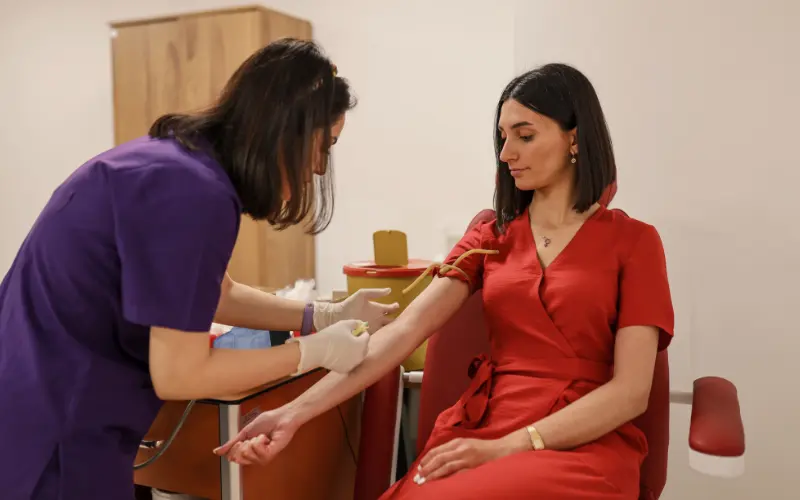
A simple blood test can measure your Vitamin D levels and identify a deficiency. Your doctor may also assess symptoms, diet, lifestyle, and overall health.
The Blood Test
Vitamin D deficiency is confirmed with a simple blood test called 25-Hydroxy Vitamin D, often written as 25(OH)D.
- It is a normal blood sample
- Fasting is usually not required
- The report is available quickly
- It is a routine, easily available test
That is it. One test removes months of guessing.
Understanding Your Report
Reports generally group results into deficient, insufficient, and sufficient ranges. Very high levels are also flagged, because too much vitamin D is harmful.
Do not compare your number with a relative’s report or a number you found online. Your doctor will read the value along with your symptoms, age, health conditions, and other test results.
Other Tests the Doctor May Suggest
Depending on your symptoms, the doctor may also check calcium, phosphorus, thyroid function, haemoglobin, kidney function, or advise a bone density scan for older adults. This helps make sure the symptoms are not being caused by something else that looks similar.
Why You Should Test Every 6 Months
This is the habit worth building. Vitamin D levels change with season, routine, diet, weight, and age. Winter levels are usually lower than summer levels. Levels also drop again after a treatment course ends if nothing else changes.
A check every six months is especially important if you:
- Have already been diagnosed with deficiency once
- Are pregnant, breastfeeding, or planning pregnancy
- Are above 40, or post-menopausal
- Have thyroid problems, diabetes, or PCOS/PMOS
- Have a child with growth or bone concerns
- Spend almost the entire day indoors
Testing twice a year is far cheaper and far easier than treating a fracture or years of unexplained fatigue.
Treatment and Correction

This is based on every individual’s need. Treatment helps address the root cause and relieve symptoms. Correction focuses on restoring function and preventing future complications.
Supplements Under Medical Guidance
Treatment depends entirely on how low your levels are. Some people need a high weekly dose for a few weeks. Others need a smaller daily maintenance dose. Some need calcium alongside it. Only your doctor can decide this, and only after seeing your report.
Never Self-Medicate or Copy Someone Else’s Dose
This part matters. Vitamin D is stored in the body, so excess does not simply pass out. Taking high doses without testing can raise calcium levels too much, which may cause nausea, vomiting, weakness, frequent urination, kidney stones, and kidney strain. Your neighbour’s weekly sachet is not a prescription for you. Get tested, then treat. In that order.
Diet and Sunlight Support
Supplements correct the deficiency. Sunlight and diet help you hold on to the improvement. You need both, not one or the other.
Add regular sun exposure to your routine, improve calcium and protein intake, and stay physically active, since weight-bearing activity supports bone strength.
Retesting and Follow-Up
After completing the prescribed course, the doctor will usually advise a repeat test to confirm your levels have improved. Then you move to a maintenance plan.
Skipping the follow-up test is a common mistake. Without it, you are guessing again.
How Long Until You Feel Better
Be patient with this one. Some people notice better energy within a few weeks. Bone pain, muscle weakness, and hair-related symptoms usually take longer, often two to three months or more. Vitamin D correction is a slow, steady process. It is not a painkiller.
When Should You Get Your Vitamin D Tested?

Do not wait for all nine signs. Consider getting tested if:
- Tiredness has lasted for several weeks with no clear reason
- Bone, back, hip, or knee pain keeps returning without injury
- You get frequent infections or take long to recover
- Muscle weakness or leg cramps have become regular
- Hair fall is increasing along with other symptoms
- You are pregnant, breastfeeding, or planning a pregnancy
- You are post-menopausal or above 40
- An elderly family member has had a fall or fracture
- A child complains of leg pain, or has delayed growth or bowed legs
- You spend nearly the whole day indoors
- You already have thyroid problems, diabetes, or PCOS/PMOS
- You were diagnosed with deficiency earlier and never retested
Two or three of these repeating for a few weeks is reason enough to get the test done.
Frequently Asked Questions
1. What are the first signs of vitamin D deficiency?
The earliest signs are usually constant tiredness, low energy, body or back pain, muscle weakness, and frequent illness. Hair fall and low mood can also appear early. In some people there are no symptoms at all, which is why testing is important.
2. Can I get enough vitamin D from Indian food alone?
Usually not. Very few foods naturally contain vitamin D, and most of them are not part of a regular Indian vegetarian diet. Food can support your levels, but it rarely corrects an existing deficiency on its own.
3. How much sunlight do I need every day?
Roughly 15 to 30 minutes of direct sunlight on the arms, legs, or back during mid-morning to early afternoon, on most days. People with darker skin need longer. Sunlight through glass or over sunscreen does not count.
4. Is vitamin D deficiency serious?
It is very treatable, but ignoring it for years is not harmless. Long-term deficiency can weaken bones, increase fracture risk, reduce immunity, cause muscle weakness, and affect a child’s growth.
5. How is vitamin D deficiency diagnosed?
With a simple blood test called 25-Hydroxy Vitamin D. Fasting is usually not needed and the report comes quickly.
6. Can vitamin D deficiency cause hair fall?
Yes, low vitamin D can contribute to hair fall and thinning. It is not always the only cause, so a proper evaluation is needed, especially if hair fall comes with tiredness or body pain.
7. How long does it take to correct vitamin D deficiency?
Energy often improves within a few weeks, while bone pain and muscle weakness may take two to three months or longer. It depends on how low the levels were and how consistently treatment is followed.
8. Can I take vitamin D supplements without a test?
It is not advisable. Vitamin D is stored in the body and excess can raise calcium levels dangerously. Always test first and take the dose your doctor prescribes.
9. Should children be tested for vitamin D deficiency?
Yes, if a child has frequent leg pain, delayed walking or growth, bowed legs, dental problems, or falls sick very often. Children spending most of their day indoors are also at higher risk.
10. Where can I get a vitamin D test in Nawanshahr?
You can get a vitamin D test done at Raja Hospital, Nawanshahr, along with proper evaluation of your symptoms and guidance on treatment.
Struggling with same?
Book Your Appointment With Our Expert Doctors

Conclusion
Vitamin D deficiency is common, easy to miss, and easy to blame on something else. Tiredness, body pain, weak muscles, hair fall, frequent illness, low mood, and slow healing may look like separate problems. Together, they often point to one simple cause.
The two beliefs that keep people from acting are the same two beliefs that need to go: that Punjab gets enough sun, and that a healthy home diet makes supplements unnecessary. Sunlight only helps if your skin actually meets it. Diet only helps if the food actually contains vitamin D.
You do not need to guess, and you do not need to worry. You need one blood test, and you need it every six months.
If you are noticing these signs, visit Raja Hospital, Nawanshahr for a vitamin D test and proper medical guidance. Getting checked takes a few minutes. Ignoring it can cost you years of energy, strength, and bone health.