
Paralysis Treatment in Nawanshahr: Why the First 4 Hours Decide Recovery
REVIEWED BY Dr. Mohd. Hanif Bhat (MBBS, DrNB, Neurosurgery) on 11th september 2026.
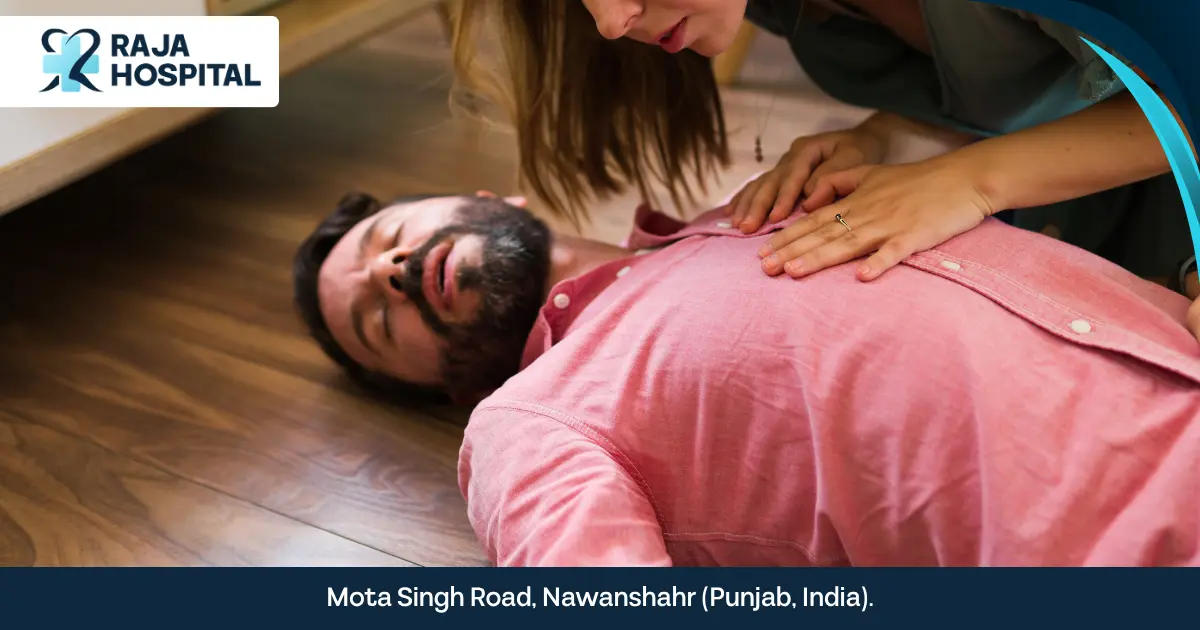
It usually starts quietly. A 62-year-old man in Nawanshahr wakes up around 5 in the morning. He tries to get up and his right arm feels heavy, like someone has tied a weight to it. He tells his son, “Bas kamzori hai, thakan hai.” The family gives him tea. Someone suggests a massage with warm mustard oil. Someone else says let him sleep a little more, he will be fine by morning.
By 10 AM he cannot hold a glass. By noon his speech is slurred. They reach the hospital at 2 PM.
And that is the part that hurts the most, because at 5 AM he could have been treated. At 2 PM, a lot of the damage is already permanent.
This is not a rare story. It happens in our area far more often than it should, and almost never because the family did not care. It happens because nobody told them what the early signs look like, or that there is a clock running from the very first minute.
So let us fix that today. By the end of this blog, you will know exactly what to watch for, what to ignore, and what to do in the first hour. No heavy medical language. Just the things that actually save someone.
Note: If someone right now has a drooping face, a weak arm, or sudden slurred speech, stop reading and get them to a hospital immediately. Do not wait for it to improve. Do not give food, water, or medicine. Note the time symptoms started and go.
First, Let Us Be Clear About What Paralysis Actually Is

Most people think paralysis is a disease. It is not. Paralysis is a symptom. It is a sign that something has gone wrong somewhere else, usually in the brain or the spinal cord.
Think of it like the wiring in your house. Your brain is the switchboard, your nerves are the wires, and your muscles are the bulbs. When you decide to lift your hand, the brain sends a signal down the wire and the muscle obeys. When the wiring gets damaged or blocked, the signal never arrives. The bulb does not glow.
And here is the important part, the part that should give you hope: in most cases, the muscle is perfectly fine. The arm is fine. The leg is fine. The problem is the signal. And a blocked signal can often be restored, if you get help in time.
Depending on where the damage is, paralysis can look different:
- One side of the body (arm and leg on the same side) is the most common pattern, and it usually points to a stroke
- Only the face, where one side droops and the smile becomes crooked
- Both legs, which usually points to a spine problem or injury
- The whole body, which is rare and usually follows a severe injury or infection
You do not need to figure out which type it is. That is the doctor’s job. Your job is only to notice that something has suddenly changed and to act on it.
Why Does Paralysis Happen? The Real Reasons

Families often ask us, “Doctor, aisa achanak kaise ho gaya?” It feels sudden, but the cause has usually been building for years.
Stroke is the biggest reason, by far. A stroke is either a clot blocking blood flow to a part of the brain, or a blood vessel bursting inside the brain. Either way, that part of the brain stops getting oxygen and starts dying within minutes. Whatever that area controlled, an arm, a leg, speech, stops working.
High blood pressure is the number one culprit behind stroke. And this is where our region has a serious problem. So many people in Nawanshahr have high BP without knowing it, because it causes no pain. No headache, no discomfort, nothing. It silently damages blood vessels for years until one of them gives up. This is why we call it the silent killer, and it is not an exaggeration.
Uncontrolled diabetes does the same thing, slowly weakening and narrowing blood vessels all over the body, including in the brain.
Head and spine injuries are the next big cause. Road accidents, a fall from a height, a fall in the bathroom, a tractor or farm accident. Elderly people especially, a single bad fall can damage the spine enough to cause paralysis.
Nerve compression and slipped disc can cause weakness, numbness, or partial paralysis in the legs, often building up gradually rather than suddenly.
Infections like meningitis, encephalitis, or in some cases tuberculosis affecting the spine, can also lead to paralysis.
Bell’s palsy causes one side of the face to suddenly droop. It often gets mistaken for a stroke, and it is usually treatable, but you cannot tell the difference at home. Only a doctor can.
Brain tumours are a less common cause, but they do cause slow, progressive weakness on one side.
Now look at the everyday habits that push all of this forward: tobacco and smoking, alcohol, very oily and salty food, ghee-heavy diets, almost no physical activity, skipping BP or sugar medicines once you feel “theek”, and never getting a checkup because “koi problem hi nahi hai.”
If a few of those describe someone in your house, they are at risk. That is not a scare tactic. That is just arithmetic.
The Early Warning Signs You Must Never Ignore

This is the most important section in this blog. If you remember nothing else, remember this part.
Doctors worldwide use a simple formula called BE FAST. It takes ten seconds to check and it works. Here it is in plain language.
B for Balance
Sudden dizziness. Loss of balance. Walking like a drunk person even though they have not touched anything. Suddenly stumbling or unable to stand straight.
E for Eyes
Sudden blurred vision, double vision, or loss of vision in one eye. It comes out of nowhere, with no pain.
F for Face
Ask them to smile. If one side of the face droops or the smile goes crooked, that is a red flag.
A for Arms
Ask them to raise both arms and hold them up. If one arm drifts down on its own, or they cannot lift it at all, that is a red flag.
S for Speech
Ask them to repeat a simple sentence. If the speech is slurred, the words come out jumbled, or they cannot understand what you are saying, that is a red flag.
T for Time
Look at the clock. Note the exact time symptoms started. Then leave for the hospital immediately.
That time you noted is the single most valuable piece of information you can carry with you, because the doctor’s treatment decision depends on it.
And the quiet signs people always dismiss
The BE FAST signs are loud. These ones are soft, which is exactly why they get ignored:
- Tingling, numbness, or a “sleeping” feeling in one arm or one leg that does not go away
- A sudden severe headache, the worst of their life, sometimes with vomiting
- Weakness that comes and goes away on its own within a few minutes
- Suddenly dropping things, or not being able to grip a cup or a roti properly
- One side of the face going numb while eating, or food slipping out of the mouth
- Sudden trouble swallowing
- Sudden confusion, or not recognising familiar people for a few minutes
Please read that fourth point again: weakness that goes away on its own. In medical terms it is called a TIA, a mini-stroke. Families relax when this happens. “Dekho, theek ho gaya.”
That is the most dangerous mistake in this entire blog. A TIA is not an all-clear. It is a warning shot. It means a full stroke may be coming in the next few days or weeks. Anyone who has had a TIA needs to see a doctor the same day, even if they feel completely normal.
The Golden Window: Why Four Hours Change Everything

Here is the hard truth about the brain.
During a stroke, brain cells start dying within minutes. Not hours. Minutes. And brain cells do not grow back. Every minute you spend at home waiting to see if things improve, a part of the brain is being lost permanently.
But here is the good news, and it is genuinely good news.
If the stroke is caused by a clot, and the patient reaches a hospital within roughly 4 to 4.5 hours of the first symptom, doctors can give a clot-dissolving injection that can break the clot and restore blood flow. In many cases the weakness improves dramatically. Some patients walk out of the hospital almost as they came in.
For certain patients, a procedure to mechanically remove the clot can help within a slightly wider window, and that decision depends on scans and the patient’s condition.
But all of it depends on one thing. When did it start, and when did you reach.
This is the difference you are choosing between:
| Reached within 4 hours | Reached after 12 or more hours |
| Clot-dissolving treatment possible | That window has closed |
| Good chance of major recovery | Damage is largely permanent |
| Shorter hospital stay, faster rehab | Long rehab, partial recovery |
| Often returns to independent living | Often needs lifelong support |
One simple rule to carry with you: anything that appears suddenly is an emergency, no matter how mild it feels. Mild numbness that appeared in one minute is more serious than pain that has been there for a month.
Six Myths That Cost Families Their Recovery

We see these every single week. Each one costs precious hours.
Myth 1: “It is just weakness, let him rest.”
Sleeping through a stroke is the most common and most costly delay we see. If a symptom appeared suddenly, rest will not fix it. Rest will only run down the clock.
Myth 2: “Massage, oil, or a home remedy will open the blockage.”
Massage cannot reach a clot inside the brain. No oil, no garlic, no kadha, no pressing of the hand or foot. These things do not harm the brain directly, but they do something worse: they consume the only hours in which real treatment was possible.
Myth 3: “Let us wait and see if it gets better by morning.”
The window closes while you wait. This is the sentence we most often hear from families who arrived too late.
Myth 4: “Paralysis only happens to old people.”
It does not. We are seeing strokes in people in their 30s and 40s, driven by high BP, tobacco, stress, diabetes, and sedentary lifestyles. Age does not protect anyone.
Myth 5: “It went away on its own, so he is fine now.”
A TIA means a big stroke may be days away. This is the one warning you get, and ignoring it is how a preventable stroke becomes a permanent one.
Myth 6: “Once paralysis happens, nothing can be done.”
This is the myth that makes families give up, and it is simply wrong. Even patients who arrive late can regain significant function with proper physiotherapy, speech therapy, and rehabilitation. Recovery continues for months. Giving up early is what limits it, not the paralysis itself.
What Treatment Actually Looks Like

A lot of families hesitate because they do not know what will happen at the hospital. They imagine something frightening and expensive. So let us remove that fear.
Step 1: Quick assessment. The moment a suspected stroke patient arrives, the medical team checks consciousness, strength on each side, speech, BP, and sugar. This takes minutes, not hours.
Step 2: A brain scan. A CT or MRI shows whether it is a clot or a bleed. This is essential, because the two need opposite treatments. This is also exactly why home treatment is impossible. Nobody can tell the difference without a scan.
Step 3: Treatment.
- For a clot, the clot-dissolving injection if the patient is within the time window, or a procedure to remove the clot in selected cases
- For a bleed, controlling blood pressure, reducing pressure inside the brain, and surgery if required
- Alongside this, stabilising BP, sugar, and oxygen levels, because uncontrolled numbers make everything worse
Step 4: Recovery and rehab. This is where real life is rebuilt. Physiotherapy to regain movement and strength. Occupational therapy to relearn daily tasks like eating, dressing, and bathing. Speech therapy if speech or swallowing is affected. And clear guidance for the family on home care, positioning, and preventing the next stroke.
At Raja Hospital, this entire chain, emergency care, diagnostics, treatment, and structured rehabilitation, is available in one place, so a family is not running from one centre to another during the hours that matter most.
And honestly, the outcome depends far less on luck than people assume. It depends on when you walked in.
If You Live With an Elderly or High-Risk Family Member
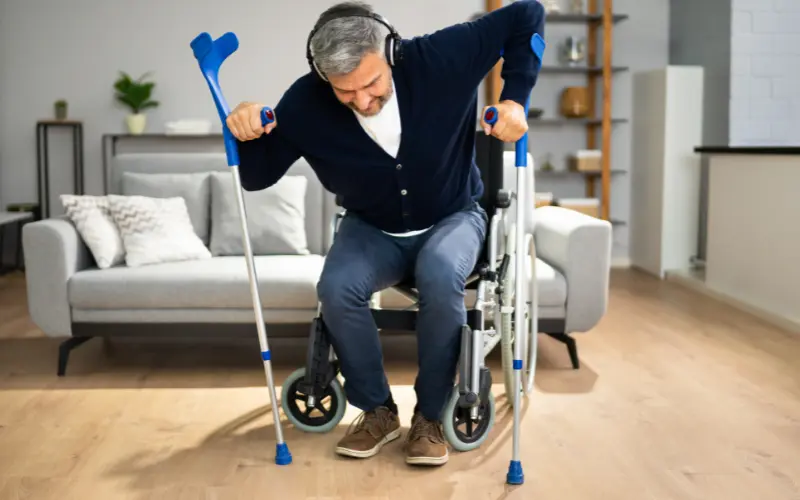
If someone in your home has high BP, diabetes, heart disease, a smoking or tobacco habit, or a past stroke, treat this section as your checklist.
- Check BP and sugar regularly, at least once a month, and write the readings down
- Never stop medicines because they “feel fine.” BP medicines work only while they are being taken
- Do not leave a high-risk person alone for long hours. Most strokes happen in the early morning, and many are found late simply because nobody checked
- Keep the hospital number saved in two or three family members’ phones, not just one
- Know your fastest route to the hospital before you need it, and know who will drive
- Do a 10-second BE FAST check any time something feels even slightly off
- Keep a small folder ready with past prescriptions, reports, and a list of current medicines
- Cut down salt, tobacco, and alcohol at home. Prevention is much easier than recovery
None of this is complicated. It just needs someone in the family to take ownership of it.
Frequently Asked Questions
1. Can paralysis be cured completely?
In many cases, yes, especially when treatment starts within the first few hours. Even when some weakness remains, consistent physiotherapy and rehabilitation can restore a large part of normal function. Recovery keeps improving for months.
2. How do I know if it is a stroke or just weakness?
Speed of onset is the clue. Ordinary weakness builds up slowly over days. A stroke appears suddenly, often within minutes, and usually affects one side of the body. If it came on suddenly, treat it as an emergency.
3. What should I do in the first 10 minutes?
Note the exact time symptoms started. Do not give any food, water, or medicine, because swallowing may be affected. Do not massage or wait. Take them to a hospital with emergency and scan facilities immediately.
4. Can young people get paralysis?
Yes. Strokes in people in their 30s and 40s are rising, driven by high BP, diabetes, tobacco, stress, and inactive lifestyles. Age is not protection.
5. Is paralysis always caused by a stroke?
No. Head and spine injuries, nerve compression, infections, Bell’s palsy, and tumours can all cause it. But stroke is the most common cause, and the one most sensitive to time.
Struggling with same?
Book Your Appointment With Our Expert Doctors

Conclusion: Back to That Morning
Remember the man from the beginning of this blog?
Now imagine the same morning with one change. His son notices the heavy arm, asks him to smile, sees one side droop. Asks him to raise both arms, one drifts down. He does not reach for the oil. He does not wait for morning. He notes the time, 5:10 AM, and they leave for the hospital.
They arrive by 5:40. The scan shows a clot. He gets the injection well inside the window. Within days he is moving his arm again. Within weeks, with physiotherapy, he is walking on his own and back to his routine.
Same man. Same stroke. Completely different life, decided by about four hours and one family member who knew what to look for.
You do not need to be a doctor. You do not need to diagnose anything. You only need to notice, and to move.
Note: If you or anyone at home has had any of these signs, even briefly, even if it passed, please get it checked today. Book a consultation at Raja Hospital, Nawanshahr. A checkup costs you an hour. Waiting can cost a lifetime.